










Key Disputes Emerge in Case Involving Djihad as Prosecution Again Calls for Yampano to Be Held Responsible
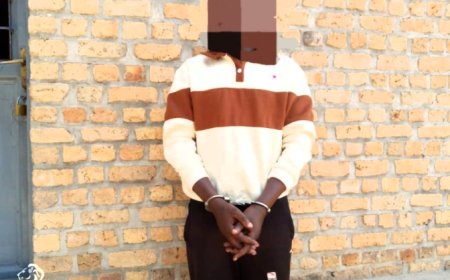
The Kicukiro Primary Court on Thursday, December 11, resumed the hearing on a request for provisional detention in a case involving Uzabakiriho Cyprien (commonly known as Djihad), Ishimwe François Xavier, and Kwizera Nestor, alias Pappy Nestor.
The session had previously been adjourned after Ishimwe requested more time to secure legal representation. However, when he appeared in court again, he told the judge he had no explanation for why his lawyer failed to show up. The court decided to proceed with the hearing.
The prosecution argued that strong grounds exist to justify 30 days of provisional detention.
According to prosecutors, investigations revealed that Ishimwe distributed the intimate video of artist Yampano and even received small payments from individuals to whom he sent the footage one person reportedly paid him 100 Rwandan francs.
Although Ishimwe denied direct involvement, claiming he had lent his phone to a friend at the time the alleged acts occurred, he failed to provide the person’s identity or any evidence supporting his claim. The prosecution dismissed his explanation as an attempt to avoid responsibility.
Pappy Nestor Admits Sharing the Video, Denies ‘Dissemination’
Kwizera Nestor, known as Pappy Nestor, admitted in court that he shared the video with two friends after requesting it from a woman identified as Nyinawumuntu Florence. He said he gave the video to Kalisa John and another friend named Eric.
However, he maintained that he did not disseminate the footage, arguing that the initial leak should be attributed to Yampano himself, who filmed the content and stored it in an email account accessible to multiple people.
The presiding judge questioned the prosecution on why Yampano was not considered the primary culprit in the leak, given that he filmed the video and placed it in a shared email account.
Prosecutors responded that although the footage was indeed taken by Yampano and his partner, it was Ishimwe Patrick “Pazzo”, Yampano’s manager, who downloaded the video and forwarded it to a man identified as Ddumba, based in Canada, who allegedly published it online.
The prosecution stated that Djihad shared the video by posting a still image from it on his WhatsApp status, suggesting he contributed to its spread.
They also said a forensic analysis showed that the video circulated within a WhatsApp fan group created by Djihad, although investigators confirmed that it was actually posted there by Rukundo Hertier, not by Djihad himself.
Djihad denied the allegations, insisting that he never shared the video. He acknowledged posting an image, but said it was part of a YouTube commentary condemning Yampano’s behavior not a dissemination of the intimate footage itself.
He did not deny creating the fan WhatsApp group but stressed he had no control over who shared what, nor knowledge of who leaked the video there. He questioned why he was detained if the prosecution knew who had originally distributed the footage.
Djihad’s lawyers Me Bayisabe Irene and Me Fatikaramu Jean Pierre argued that the court must focus on the source of the leaked video. They insisted that Yampano, who knowingly stored the footage in an email account accessible to four people, should be the one held primarily accountable.
Me Bayisabe further suggested that Yampano may have intentionally leaked the video to draw attention common behavior in the entertainment industry, he argued. He claimed the artist's departure from the country shortly afterward raised further suspicion that he orchestrated the leak to “go viral” before traveling to Europe.
The defense added that there is no risk of Djihad fleeing justice. They pointed out that when the Rwanda Investigation Bureau (RIB) informed him that he was wanted, he travelled to Goma and still returned, showing he had no intention of absconding. Me Bayisabe even offered to personally guarantee Djihad’s compliance with court obligations.
Tags: