

















How Cristiano Ronaldo’s Mindset Redefined Longevity in Football

How Cristiano Ronaldo’s Mindset Redefined Longevity in Football

Nov 6, 2025 - 08:47
 0

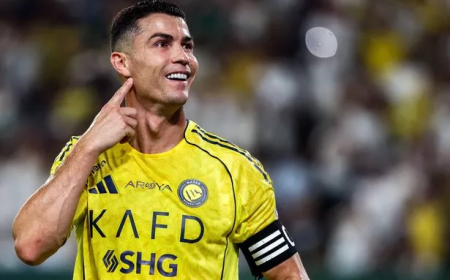
At 40, most footballers have long hung up their boots their names fading into nostalgia, their bodies unwilling to meet the game’s relentless rhythm. But Cristiano Ronaldo, even as he admits retirement is “coming soon,” remains a living contradiction: an athlete who defied biology, time, and expectation.


His announcement this week that he is preparing for life beyond football was no surprise. Yet it struck a chord across generations not for what it ends, but for what it represents: a career built on mindset more than magic.

For two decades, Ronaldo has stood as football’s most disciplined perfectionist. From the early mornings in Manchester to late-night gym sessions in Madrid, every rep, every sprint, every recovery routine was deliberate.

“He was never satisfied,” recalled one former Manchester United staff member years ago. “Even when he scored two, he wanted three. It wasn’t arrogance it was obsession.”

That obsession built one of sport’s greatest careers: more than 950 career goals, five Ballon d’Ors, and five Champions League titles. But behind those numbers lies a truth Ronaldo has repeated for years talent starts the story, but discipline finishes it.

Longevity in football used to mean reaching your mid-thirties before fading gracefully into coaching or punditry. Ronaldo changed that.

By adopting an athlete’s mindset similar to elite Olympians, he extended his prime deep into his late thirties and continues scoring in his forties. Nutritionists, sleep scientists, and personal trainers have described his body management as “scientific.”

Daily ice baths, cryotherapy, low-fat diets, and strict sleep schedules became second nature. Teammates joked that visiting Ronaldo’s house felt like walking into a recovery lab.

But for him, it was never about vanity. It was about staying competitive staying ready.

While many players rely on instinct, Ronaldo built systems. His day runs like clockwork: breakfast at 8:00 a.m., recovery stretches at 9:00, gym at 10:00, and tactical study by noon.

“Routine gives me peace,” he once said. “When I control my day, I control my game.”

That mindset didn’t just extend his career; it influenced a generation of professionals. Younger stars like Kylian Mbappé and Erling Haaland cite Ronaldo’s lifestyle as a blueprint for elite performance.

Perhaps Ronaldo’s greatest contribution isn’t just in goals or trophies it’s in how he reframed ambition. He normalized obsession. He made sacrifice fashionable. He turned work ethic into a brand.

In an era of instant gratification, his discipline became its own statement. “You can’t cheat the process,” he often said, echoing the mantra of countless elite athletes who see greatness as routine, not luck.

Ronaldo says he has prepared for retirement since his mid-twenties. That preparation shows: hotels, gyms, fashion lines, and a global CR7 empire worth hundreds of millions of dollars.

Yet in his recent interview, there was a quiet vulnerability an acknowledgment that no matter how ready he is, nothing can replace the adrenaline of scoring a goal.

“Everything has a beginning and everything has an end,” he said. “But I’ll stop happy, because I gave everything.”

There will be debates as there always are about whether Ronaldo or Lionel Messi defined this era. But longevity may be Ronaldo’s lasting victory.

He redefined what an athlete could be at 35, at 38, at 40. He turned physical decline into a delayed chapter. And in doing so, he changed football’s understanding of age and excellence.

When he finally walks away, the record books will celebrate his numbers.
But football will remember something greater: a man who outworked time itself.


ABAYO Bonheur ABAYO Bonheur is a professional sports journalist with extensive experience across multiple radio stations and digital platforms. He holds a degree in Journalism and Communication from the University of Rwanda, where he honed his skills in reporting, storytelling mainly documentaries. Throughout his career, Bonheur has gained both tangible experiences in live broadcasting and reporting, as well as the ability to maintain anonymity when covering sensitive stories. His versatility allows him to produce insightful, accurate, and engaging content across a variety of sports, earning him recognition for professionalism and reliability in the field.

How Cristiano Ronaldo’s Mindset Redefined Longevity in Football

Nov 6, 2025 - 08:47
 0
How Cristiano Ronaldo’s Mindset Redefined Longevity in Football

At 40, most footballers have long hung up their boots their names fading into nostalgia, their bodies unwilling to meet the game’s relentless rhythm. But Cristiano Ronaldo, even as he admits retirement is “coming soon,” remains a living contradiction: an athlete who defied biology, time, and expectation.


His announcement this week that he is preparing for life beyond football was no surprise. Yet it struck a chord across generations not for what it ends, but for what it represents: a career built on mindset more than magic.

For two decades, Ronaldo has stood as football’s most disciplined perfectionist. From the early mornings in Manchester to late-night gym sessions in Madrid, every rep, every sprint, every recovery routine was deliberate.

“He was never satisfied,” recalled one former Manchester United staff member years ago. “Even when he scored two, he wanted three. It wasn’t arrogance it was obsession.”

That obsession built one of sport’s greatest careers: more than 950 career goals, five Ballon d’Ors, and five Champions League titles. But behind those numbers lies a truth Ronaldo has repeated for years talent starts the story, but discipline finishes it.

Longevity in football used to mean reaching your mid-thirties before fading gracefully into coaching or punditry. Ronaldo changed that.

By adopting an athlete’s mindset similar to elite Olympians, he extended his prime deep into his late thirties and continues scoring in his forties. Nutritionists, sleep scientists, and personal trainers have described his body management as “scientific.”

Daily ice baths, cryotherapy, low-fat diets, and strict sleep schedules became second nature. Teammates joked that visiting Ronaldo’s house felt like walking into a recovery lab.

But for him, it was never about vanity. It was about staying competitive staying ready.

While many players rely on instinct, Ronaldo built systems. His day runs like clockwork: breakfast at 8:00 a.m., recovery stretches at 9:00, gym at 10:00, and tactical study by noon.

“Routine gives me peace,” he once said. “When I control my day, I control my game.”

That mindset didn’t just extend his career; it influenced a generation of professionals. Younger stars like Kylian Mbappé and Erling Haaland cite Ronaldo’s lifestyle as a blueprint for elite performance.

Perhaps Ronaldo’s greatest contribution isn’t just in goals or trophies it’s in how he reframed ambition. He normalized obsession. He made sacrifice fashionable. He turned work ethic into a brand.

In an era of instant gratification, his discipline became its own statement. “You can’t cheat the process,” he often said, echoing the mantra of countless elite athletes who see greatness as routine, not luck.

Ronaldo says he has prepared for retirement since his mid-twenties. That preparation shows: hotels, gyms, fashion lines, and a global CR7 empire worth hundreds of millions of dollars.

Yet in his recent interview, there was a quiet vulnerability an acknowledgment that no matter how ready he is, nothing can replace the adrenaline of scoring a goal.

“Everything has a beginning and everything has an end,” he said. “But I’ll stop happy, because I gave everything.”

There will be debates as there always are about whether Ronaldo or Lionel Messi defined this era. But longevity may be Ronaldo’s lasting victory.

He redefined what an athlete could be at 35, at 38, at 40. He turned physical decline into a delayed chapter. And in doing so, he changed football’s understanding of age and excellence.

When he finally walks away, the record books will celebrate his numbers.
But football will remember something greater: a man who outworked time itself.